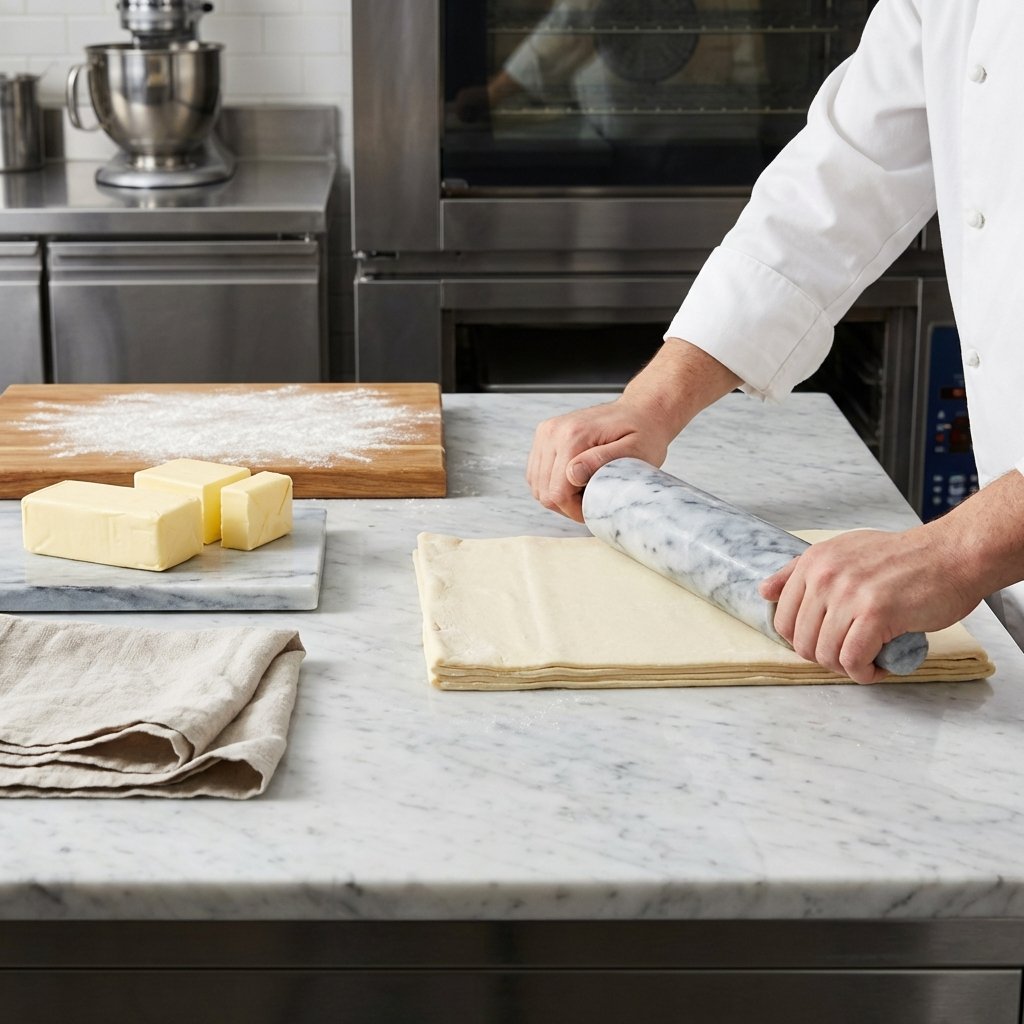
Why Store-Bought Puff Pastry is Your Friend
Making puff pastry from scratch takes 4+ hours of folding and chilling. Store-bought gives you 95% of the quality in 5% of the time. Even professional bakers use it!
Best brands in Singapore:
- Kawan Puff Pastry (frozen section)
- Pepperidge Farm
- Tenderflake
Thawing: The Most Critical Step
The Right Way (Slow Thaw)
Method: Overnight in refrigerator Time: 8-12 hours Why: Stays cold, easy to work with, no condensation Andy’s routine: Transfer to fridge night before baking
The Rushed Way (Room Temp)
Method: Counter thaw Time: 30-45 minutes Watch for: Still cold but pliable Stop when: Can unfold without cracking
NEVER Microwave!
Why: Creates hot/cold spots, melts butter unevenly Result: Pastry won’t puff properly
Handling Rules
Rule #1: Keep It Cold
- Work quickly in cool kitchen
- If pastry gets warm, chill 10 minutes
- Soft pastry = butter melting = won’t puff
Rule #2: Minimal Flour
- Use just enough to prevent sticking
- Too much dries out pastry
- Brush off excess before folding
Rule #3: Don’t Overwork
- Roll gently, even pressure
- Don’t stretch - it springs back
- Re-roll scraps only once
Rolling and Shaping Tips
Rolling Out
- Light flour on surface and pin
- Roll from center outward
- Rotate pastry 90° between rolls
- Aim for 3-4mm thickness
- Roll in one direction for even puff
Cutting
Use sharp knife or pizza cutter
- Dull knife seals edges (prevents puffing)
- Cut straight down, no sawing motion
- Clean blade between cuts
For decorative edges:
- Fork marks
- Knife crimps
- Cookie cutters (sharp ones!)
Egg Wash Application
What to use: 1 egg beaten with 1 tbsp water When: Just before baking How: Light, even coating Avoid edges: Egg wash glues layers (prevents rise)
Common Mistakes to Avoid
❌ Thawing in microwave - Ruins texture ❌ Working with warm pastry - Won’t puff ❌ Sealing edges - Prevents rise ❌ Skipping egg wash - Pale, not golden ❌ Low oven temp - Needs high heat to puff
✅ Thaw overnight in fridge ✅ Keep pastry cold while working ✅ Use sharp knife for cutting ✅ Egg wash for golden color ✅ High oven temperature (200°C+)
Baking for Maximum Puff
Temperature: 200-220°C (390-425°F) Why so hot: Creates steam quickly = maximum rise Position: Middle rack for even browning Time: 15-25 minutes (watch closely!)
Signs of doneness:
- Deep golden brown
- Puffed to double/triple height
- Crispy, not soft
- Sounds hollow when tapped
Creative Uses Beyond Pies
Sweet treats:
- Palmiers (elephant ears)
- Turnovers (apple, cherry)
- Cream horns
- Mille-feuille
Savory options:
- Cheese straws
- Sausage rolls
- Vol-au-vents
- Empanadas
Storage
Unopened package: Follow package date (usually 12+ months frozen) Thawed pastry: Use within 2 days, keep refrigerated Baked puff pastry: Best same day, can keep 2 days (loses crispness)
Refreezing: Can refreeze once if kept cold, quality decreases slightly
Troubleshooting
Pastry didn’t puff:
- Oven not hot enough
- Pastry was too warm
- Edges were sealed
- Overworked the dough
Uneven puffing:
- Uneven rolling
- Dull knife sealed some edges
- Oven hot spots (rotate halfway)
Burnt before fully puffed:
- Oven too hot
- Positioned too close to top element
- Cover with foil, reduce temp
Pro Tips
For extra rise: Freeze shaped pastries 15 minutes before baking For shiny crust: Egg wash twice (before and halfway through) For savory: Sprinkle seeds, cheese, or herbs on top For crispy: Bake on parchment, not greased pan
Key Takeaways
✅ Slow thaw in fridge overnight = best results ✅ Keep pastry cold while working ✅ Sharp knife = proper puffing ✅ High heat (200°C+) = maximum rise ✅ Store-bought is perfectly acceptable - even for pros!
Master these basics and puff pastry becomes your secret weapon for quick, impressive bakes!